Herbal Green Tea Kadha for Travel: Kadha Tea Bags vs Loose Spices
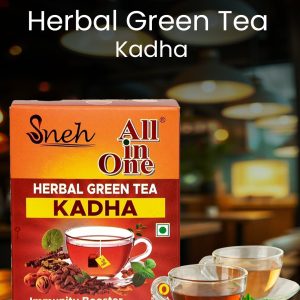
Written by: Sneh All In One Editorial Team Herbal Green Tea Kadha is a ready-to-brew tea bag blend made with green tea extract and traditional
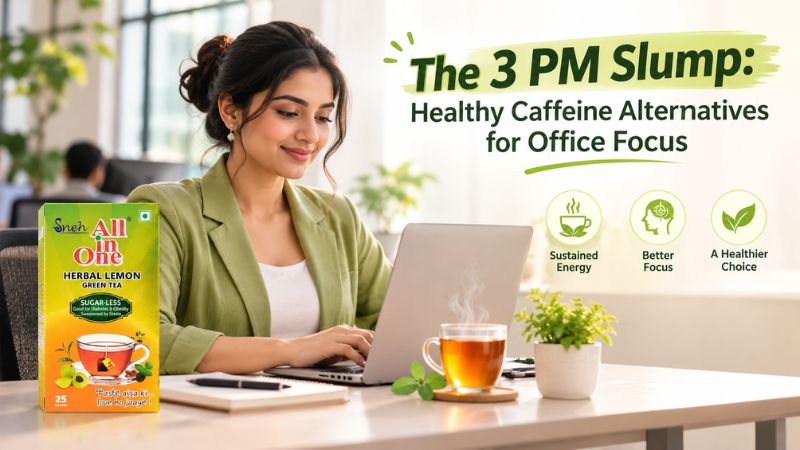
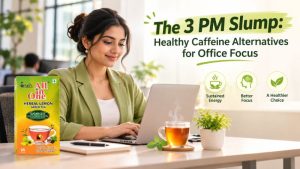
To beat the 3 PM slump without another cup of coffee, drink water, take a 5–15-minute walking break, choose a balanced snack, and consider a lower-caffeine beverage such as Herbal Lemon Green Tea. These habits offer practical ways to manage afternoon tiredness without depending entirely on coffee.
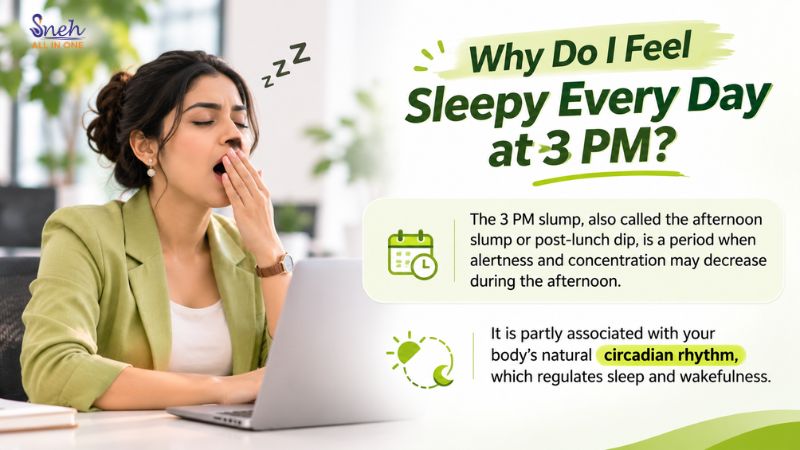
The 3 PM slump, also called the afternoon slump or post-lunch dip, is a period when alertness and concentration may decrease during the afternoon. It is partly associated with your body’s natural circadian rhythm, which regulates sleep and wakefulness.
However, daily habits can make this tiredness more noticeable.
Common reasons include:
Understanding these factors is the first step towards managing the afternoon slump without automatically reaching for coffee.
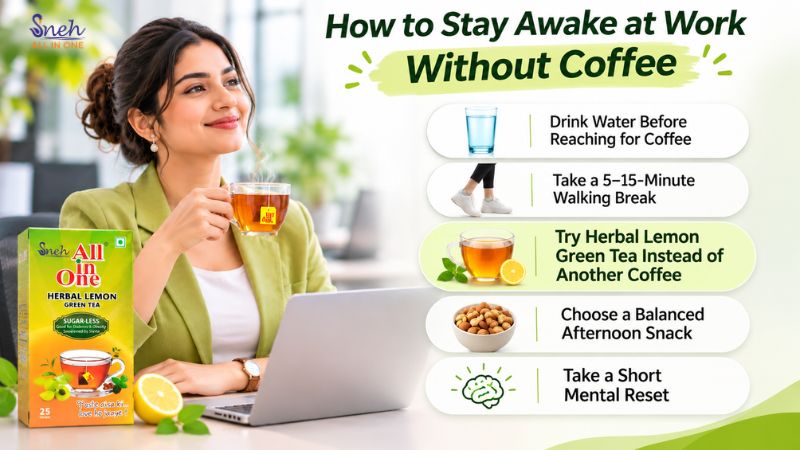
You do not always need another cup of coffee to manage afternoon tiredness. A combination of hydration, movement, balanced snacks, and short mental breaks can make your working afternoon more manageable.
Here are six practical strategies to try.
Dehydration can contribute to tiredness, headaches, and reduced concentration. Office workers often forget to drink enough water when they are busy with meetings or computer-based tasks.
Try these simple habits:
If you feel sleepy at 3 PM, start with a glass of water before reaching for another caffeinated beverage. The NHS also recommends drinking water as one of its self-help tips for managing tiredness.
A short walk can help break up long periods of sitting. According to the NHS self-help guide to fighting tiredness, even a single 15-minute walk can give you an energy boost.
You can:
Regular physical activity also supports energy levels over time. Even a brief movement break is a practical way to stay active during your workday.
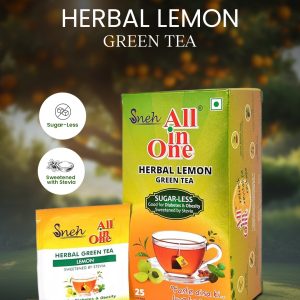
If you enjoy a warm beverage during your afternoon break, Herbal Lemon Green Tea is an option worth considering.
Green tea naturally contains caffeine, but a typical 8-ounce serving contains less caffeine than a similar serving of brewed coffee. This makes it an alternative for people who want a different caffeine source or a lighter caffeine option.
Green tea also contains L-theanine, a naturally occurring amino acid found in tea leaves. A 2025 systematic review of randomised trials in healthy adults found that L-theanine combined with caffeine may improve short-term attention and mood. However, many studies used isolated compounds at doses not equivalent to a cup of tea, and the evidence is limited. The review is available here: Payne et al., Nutrition Reviews (2025).
The amount of L-theanine in any specific product is unknown, so focus benefits are not guaranteed.
A lemon-flavoured green tea can be a refreshing addition to your afternoon routine, but it should not be treated as an instant energy drink or a treatment for fatigue.
Skipping meals or eating an unbalanced lunch can make your afternoon routine more difficult. Instead of relying on sugary biscuits, sweets, or packaged snacks, choose foods that provide a combination of nutrients.
Some convenient office snack choices include:
The NHS guidance recommends eating regular meals and healthy snacks every 3–4 hours rather than relying on large meals separated by long gaps.
Continuous work without breaks can contribute to mental fatigue. A short pause helps you step away from demanding tasks before returning with a clearer plan.
Try these simple activities:
You can also write down your next three priorities to avoid feeling overwhelmed by a long task list.
If your workplace allows it, a short nap of around 10–20 minutes may help you feel more alert. Keep it brief to reduce the chance of waking up groggy.
A nap is not a replacement for adequate night-time sleep. The CDC’s NIOSH guidance for shift workers recommends keeping daytime naps brief. However, the NHS advises avoiding daytime naps if you have trouble sleeping at night, so skip this option if that applies to you.
Yes. A typical serving of brewed green tea contains considerably less caffeine than brewed coffee, although the exact amount depends on the tea variety, serving size, and preparation method.
The following comparison uses approximate values published by the Mayo Clinic for standard 8-ounce (237 ml) servings.
Beverage | Serving size | Caffeine (mg) |
Brewed coffee | 8 oz (237 ml) | 96 |
Instant coffee | 8 oz (237 ml) | 62 |
Brewed green tea | 8 oz (237 ml) | 29 |
Brewed black tea | 8 oz (237 ml) | 48 |
Cola | 8 oz (237 ml) | 33 |
Energy drink | 8 oz (237 ml) | 79 |
Source: Mayo Clinic – Caffeine Content for Coffee, Tea, Soda and More.
Important: These are general beverage averages, not laboratory-tested values for SNEH products. The table uses 237 ml servings, whereas SNEH recommends 100 ml of water per tea bag. The caffeine content of the SNEH product has not been specified, so its exact amount should not be assumed to match standard brewed green tea. Your actual caffeine intake will also vary with the quantity of water and infusion time.
If you want to include a refreshing tea in your office routine, SNEH Sugarless Herbal Lemon Green Tea is a convenient option.
The product is described as a blend of green tea, natural herbs and spices, with lemon flavour and stevia as the sweetener. It is sweetened with stevia instead of regular sugar.
Why consider it for your workday?
How to prepare it:
For caffeine context, refer to the comparison above: its figures represent standard 237 ml servings, not the SNEH product’s 100 ml preparation. The exact caffeine content per tea bag has not been specified.
If you are looking for a stevia-sweetened tea to replace your regularly sweetened afternoon beverage, you can explore SNEH Sugarless Herbal Lemon Green Tea.
Green tea is a commonly consumed beverage, but it contains caffeine. The FDA states that up to 400 mg of caffeine per day is not generally associated with negative effects for most healthy adults. However, individual tolerance varies.
Keep these considerations in mind:
Remember to include caffeine from coffee, tea, cola, energy drinks, chocolate, and other sources when calculating your daily intake.
Managing the afternoon slump is not just about what you do at 3 PM. Your morning routine, sleep schedule, meals, and hydration habits also influence how you feel throughout the working day.
Follow these habits to build a more consistent routine:
The NHS guidance recommends regular exercise, a healthy diet, and consistent sleep times as part of managing tiredness.
A simple afternoon routine can help you break up long sitting hours and manage your workload more comfortably.
Time | Activity |
2:45 PM | Drink a glass of water |
3:00 PM | Enjoy a cup of green tea (have it earlier if you go to bed before about 9 PM or have trouble sleeping) |
3:10 PM | Take a short walking or stretching break |
3:20 PM | Have a light, balanced snack if hungry |
3:30 PM | Return to important tasks and prioritise your workload |
You can adjust this routine according to your office schedule, appetite, and caffeine tolerance.
Drink water, take a short walking break, eat a balanced snack, and give yourself a few minutes away from demanding tasks. A 5–15-minute walk can help break up sitting time. Green tea is another option if you still want some caffeine.
It can be a lighter-caffeine alternative to another coffee, but it is not a treatment for fatigue. Water, movement, regular meals, and good sleep matter more for managing afternoon tiredness.
Yes. It contains green tea, which is a natural source of caffeine. The exact amount depends on the product formulation and serving preparation. It should not be considered a caffeine-free beverage.
Not necessarily. Green tea generally contains less caffeine than brewed coffee and also contains L-theanine. Research suggests potential attention-related benefits from L-theanine and caffeine together, but it does not establish that green tea is better for everyone.
It can be a better choice if you are trying to reduce added sugar in your beverages. However, check the product’s ingredient list and nutritional information rather than assuming that every sugarless product has identical nutritional values.
For most healthy adults, up to 400 mg of caffeine per day is not generally associated with negative effects, according to the FDA. If you are pregnant, trying to conceive, breastfeeding, or sensitive to caffeine, consult a healthcare professional about an appropriate limit.
Generally yes. NCCIH reports no safety concerns for green tea as a beverage in adults, though it contains caffeine. If it doesn’t sit well, have it with or after food. Concentrated extract supplements are different: NIH ODS notes some extracts might damage the liver, especially on an empty stomach.
The NHS advises avoiding tea and coffee at least 6 hours before bed and notes that caffeine’s effects can last up to 7 hours. If you have trouble sleeping, consider stopping caffeine earlier, as individual sensitivity varies.

Written by: Sneh All In One Editorial Team Herbal Green Tea Kadha is a ready-to-brew tea bag blend made with green tea extract and traditional

Sitting at a desk for long hours can contribute to digestive discomfort, including bloating, gas, constipation and acidity. Irregular meals, rushed eating, low fluid intake
To beat the 3 PM slump without another cup of coffee, drink water, take a 5–15-minute walking break, choose a balanced snack, and consider a