Herbal Green Tea Kadha for Travel: Kadha Tea Bags vs Loose Spices
Written by: Sneh All In One Editorial Team Herbal Green Tea Kadha is a ready-to-brew tea bag blend made with green tea extract and traditional


Sitting at a desk for long hours can contribute to digestive discomfort, including bloating, gas, constipation and acidity. Irregular meals, rushed eating, low fluid intake and limited physical activity can make these problems more noticeable. Simple habits such as taking movement breaks, walking after meals, eating fibre-rich foods and drinking enough water can support better digestion during the workday.
A long meeting schedule or back-to-back deadlines can make these healthy habits easy to overlook. These Desk-Friendly Digestion Tips can help you build a more comfortable daily routine without making major changes to your work schedule.
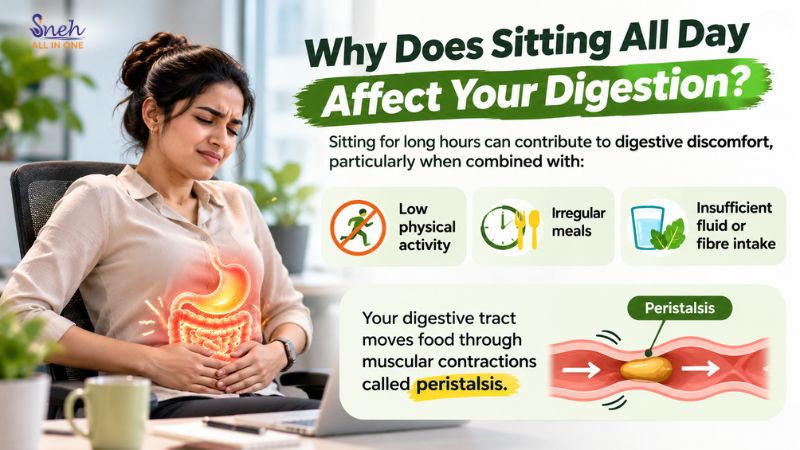
Sitting for long hours can contribute to digestive discomfort, particularly when combined with low physical activity, irregular meals and insufficient fluid or fibre intake. Your digestive tract moves food through muscular contractions called peristalsis. These movements help push food and waste through the gastrointestinal tract. Regular physical activity may support bowel regularity, while a sedentary work routine can make it harder to maintain healthy bowel habits. However, sitting itself does not automatically stop digestion.
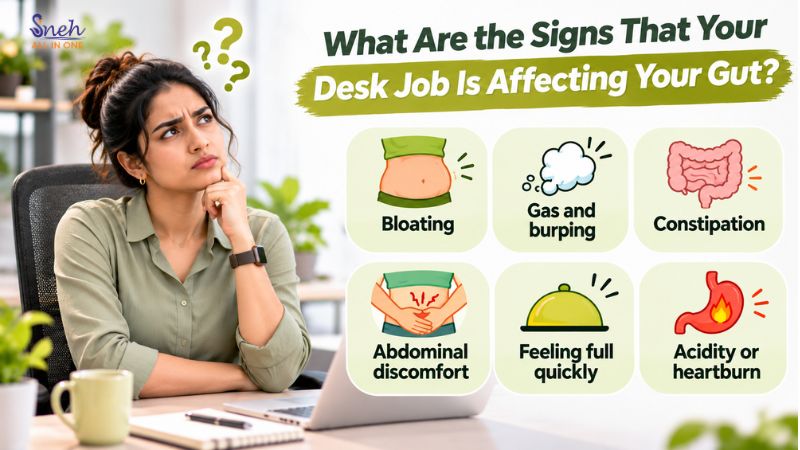
A sedentary work routine and irregular eating habits may contribute to digestive discomfort. Some common signs include:
These symptoms can have several causes. If they occur frequently or persist, consult a healthcare professional rather than assuming your desk job is the only reason.
You can support digestion during office hours by making small changes to your movement, eating habits, hydration and daily routine. Here are eleven practical tips you can follow.
Avoid sitting continuously for several hours. Get up and move around briefly about every 30 minutes. You can stretch, walk around your office or stand while taking a phone call.
CDC/NIOSH workplace guidance recommends standing or moving around every 30 minutes, or as needed, to reduce prolonged sitting.
Pair movement with a routine task, such as a trip to the water dispenser. These small breaks can help reduce prolonged sitting and add more physical activity to your day.
A short walk after lunch is an easy way to add movement to your workday. If possible, walk for 10–15 minutes at a comfortable pace instead of returning immediately to your chair.
Regular physical activity may help relieve constipation. A gentle walk around your office or nearby area is a practical starting point. You do not need to walk quickly or perform strenuous exercise immediately after eating.
If you cannot leave your desk frequently, try gentle movements that can be done in a small space.
Some simple options include:
These movements are not a treatment for digestive conditions, but they can help you break up long periods of sitting.
Eating quickly at your desk can make it easier to swallow excess air and may contribute to gas or bloating. Try to take a proper lunch break, chew your food thoroughly and avoid eating while rushing through work.
Sit upright while eating instead of bending over your laptop or leaning too far forward. Give yourself enough time to finish your meal comfortably.
Fibre-rich foods support bowel function and may help prevent constipation. The ICMR-NIN Dietary Guidelines for Indians 2024 recommend including fruits, vegetables, whole grains and pulses as part of a balanced diet.
You can add these foods to your everyday meals:
Increase fibre gradually and drink enough fluids. Adding too much fibre suddenly may cause gas or bloating in some people.
Insufficient fluid intake can make stools harder and more difficult to pass. Keep a water bottle at your desk and drink water regularly rather than waiting until you feel very thirsty.
According to Guideline 14 of the ICMR-NIN Dietary Guidelines for Indians 2024, a normal healthy person needs about eight glasses (approximately two litres) of water, including beverages, per day. Requirements increase during very hot weather and vigorous physical activity.
This is a general guideline, not a target for everyone. If you have kidney disease or your doctor has advised you to restrict fluids, follow your healthcare professional’s advice instead of applying the general two-litre recommendation.
Frequent tea, coffee and fried snacks may not suit everyone, particularly if they trigger acidity, gas or other digestive symptoms.
Instead of relying on repeated cups of tea or coffee and packaged snacks, try to:
Caffeine and high-fat foods are among the foods that may trigger reflux symptoms in some people. Individual triggers can vary.
Traditional Indian drinks and ingredients such as saunf, ajwain, jeera water and chaas are commonly included in everyday food habits. You can enjoy them as part of a balanced diet, but they should not be treated as proven remedies for digestive conditions.
The ICMR-NIN Dietary Guidelines for Indians 2024 list buttermilk among the beverage alternatives to synthetic soft drinks. You can include it as a beverage option if it suits your dietary needs.
Pay attention to how your body responds. If a particular drink or ingredient causes discomfort, reduce it or avoid it.
A very heavy lunch may leave you feeling uncomfortable or sluggish during the afternoon. Try to eat balanced meals at regular times instead of skipping meals and then eating a large portion at once.
For a practical office lunch, include a combination of:
Eat at a comfortable pace and avoid returning to work immediately if you need a few minutes to finish your meal.
Do not ignore the urge to pass stool because you are busy with work or meetings. Delaying bowel movements regularly can make it harder to maintain a comfortable bathroom routine.
NIDDK notes that doctors may suggest bowel training for people with constipation. Trying to pass stool 15–45 minutes after breakfast may help because eating stimulates the colon to move stool. Give yourself enough time and avoid straining.
Long-term stress may contribute to or worsen digestive problems. Take short breaks between work tasks, make time to relax and maintain a consistent sleep schedule.
A regular daily routine can also make it easier to maintain consistent meal timings and physical activity.
Working from home can make it easier to stay seated for long periods because there may be fewer natural breaks between tasks. You can support your digestion by creating a simple routine around meals, movement and work hours.
Try these habits:
Small, consistent changes can make a home-working routine more active and structured.
Avoid eating in a rush, sitting for hours without a break, frequent fried snacks, excess tea or coffee, and lying down soon after meals if you get reflux. Certain habits and foods may trigger discomfort, although individual responses can vary.
Instead of | Try |
Eating lunch quickly while working | Taking a proper break and eating slowly |
Sitting continuously for several hours | Standing, stretching or walking briefly about every 30 minutes |
Eating frequent fried or packaged snacks | Choosing balanced meals and limiting heavily processed snacks |
Drinking repeated cups of tea or coffee | Keeping caffeine moderate and noticing your personal triggers |
Eating a very heavy lunch | Choosing a balanced meal with vegetables, pulses and whole grains |
Ignoring the urge to use the bathroom | Making time for a regular bathroom routine |
Lying down soon after eating when you have reflux | Staying upright after meals; if you have night-time reflux, finish meals at least three hours before lying down. |
You do not need a complicated schedule to build healthier workday habits. Use this simple routine as a guide and adjust it according to your work timings and hunger.
Time | Suggested habit |
8:00–9:00 AM | Eat a balanced breakfast and drink water. |
11:00–11:30 AM | Take a short movement break and drink water if needed. |
1:00–2:00 PM | Eat a balanced lunch at a comfortable pace. |
After lunch | Take a gentle 10–15-minute walk if your schedule allows. |
3:30–4:00 PM | Take another movement break and stretch briefly. |
Every 30 minutes | Stand, stretch or walk briefly instead of sitting continuously. |
Evening | Have a balanced dinner and avoid eating in a rush. |
Before bedtime | Follow a consistent sleep routine. If you experience night-time reflux, finish meals at least three hours before lying down. |
This routine is a flexible guide, not a requirement to eat at every listed time. The ICMR-NIN Dietary Guidelines for Indians 2024 recommend restricting meal frequency to two or three times a day and avoiding routine between-meal snacking. Follow an eating routine that suits your individual nutritional needs.
Occasional bloating or constipation may improve with changes in food, hydration and physical activity. However, persistent or recurring digestive symptoms should not be ignored.
Consult a healthcare professional if you experience:
Important: Chest pain or pressure can sometimes be mistaken for acidity or indigestion. Pain that spreads to the arm, neck, jaw or back, particularly when accompanied by breathlessness, sweating, nausea or light-headedness, can indicate a heart attack. Call India’s nationwide emergency number 112 and seek emergency medical care immediately instead of treating these symptoms as indigestion.
It may contribute to bloating, particularly when combined with low physical activity, irregular meals and rushed eating. Taking movement breaks, walking after meals and eating slowly may help reduce discomfort.
A gentle walk after lunch can be a practical way to add physical activity to your routine. You can start with 10–15 minutes at a comfortable pace if you feel well enough. Avoid strenuous exercise immediately after a heavy meal. Regular physical activity may help relieve constipation.
Feeling sleepy after lunch can be a normal short-term response, particularly after a large or energy-rich meal. The body’s natural afternoon dip in alertness may also contribute. Try eating a balanced lunch, avoiding oversized portions and taking a short walk after eating.
Sitting itself is not a proven direct cause of acid reflux, but large or hurried meals, caffeine, spicy or fatty foods and lying down soon after eating can trigger symptoms in some people. If you get reflux at night, try finishing meals at least three hours before lying down.
Tea and coffee do not cause bloating in everyone. However, caffeine may trigger reflux symptoms in some people. Notice whether your symptoms occur after drinking them and adjust your intake if needed.
You can try gentle seated torso twists, shoulder rolls, seated leg extensions and deep breathing. These movements help break up long periods of sitting, although they are not a substitute for regular physical activity.
Fibre-rich foods such as fruits, vegetables, whole grains, dal, chickpeas and other pulses can support bowel function. You can include these in your lunch and increase fibre gradually while drinking enough fluids.
Try to stand, stretch or walk briefly about every 30 minutes. CDC/NIOSH workplace guidance recommends standing or moving around every 30 minutes, or as needed.
ICMR-NIN’s general guidance for a normal healthy person is approximately two litres of water a day, or around eight glasses, including beverages. You may need more in very hot weather or during vigorous physical activity. If you have kidney disease or have been advised to restrict fluids, follow your healthcare professional’s individual guidance.
SNEH All In One offers a range of herbal and green tea options for people who enjoy incorporating different tea choices into their everyday routines.
Herbal and green teas are beverage choices for people who enjoy them; they should not be considered treatments or remedies for digestive conditions.
You can explore the herbal and green tea range from SNEH All In One.
Long desk hours do not have to mean an uncomfortable digestive routine. Regular movement, balanced meals, adequate hydration and a consistent bathroom routine can help support everyday gut health.
Start with small changes, such as taking a short walk after lunch, standing up regularly and including fibre-rich foods in your meals. These Desk-Friendly Digestion Tips can help you build healthier habits while managing a busy office or work-from-home schedule.
At SNEH All In One, we believe that mindful everyday choices can be part of a balanced lifestyle. If digestive symptoms persist, become severe or are accompanied by warning signs, consult a healthcare professional.
This article is for general educational purposes only and does not replace professional medical advice, diagnosis or treatment. Digestive symptoms can have several causes. Consult a qualified healthcare professional for persistent, recurring or severe symptoms. Do not use dietary changes or traditional drinks as a substitute for prescribed medical treatment.

Written by: Sneh All In One Editorial Team Herbal Green Tea Kadha is a ready-to-brew tea bag blend made with green tea extract and traditional

Sitting at a desk for long hours can contribute to digestive discomfort, including bloating, gas, constipation and acidity. Irregular meals, rushed eating, low fluid intake

To beat the 3 PM slump without another cup of coffee, drink water, take a 5–15-minute walking break, choose a balanced snack, and consider a