Can You Reuse Tea Bags? How Many Times Can You Steep One?
Yes, you can reuse tea bags, and for most everyday teas, two cups from one tea bag is a practical limit. The second cup will


Herbal lemon green tea may be a useful beverage choice for people managing diabetes, but it should not be considered a treatment for the condition. Green tea has been studied for its potential effects on glucose and insulin-related markers, while ingredients such as Gurmar and fenugreek have also been researched for metabolic health. However, evidence remains mixed, and herbal tea should complement—not replace—prescribed diabetes care.
Herbal lemon green tea combines green tea with selected herbs and lemon for a flavorful, sugar-free beverage option. Depending on the formulation, herbal ingredients may provide different plant compounds traditionally used to support general wellness.
Sneh All-in-One Herbal Lemon Green Tea is sweetened with stevia rather than added sugar and contains a blend of herbs including Gurmar, Amrita/Giloy, Jamun seed, Methi, Senna, Triphala, Tulsi, and Stevia, along with lemon.
The product can be used as part of a balanced lifestyle, but it should not be viewed as a diabetes medicine.

The potential benefits of herbal lemon green tea mainly come from its individual ingredients rather than from lemon tea itself. Green tea, Gurmar, and fenugreek have been studied for their possible effects on blood glucose and related metabolic markers.
Research on green tea is also mixed. One meta-analysis of 17 randomized controlled trials involving 1,133 participants found that green tea significantly reduced fasting glucose and HbA1c.
However, another systematic review reached a more cautious conclusion. It analyzed seven randomized controlled trials involving 510 participants at risk of type 2 diabetes and found no statistically significant effect on fasting plasma glucose, fasting insulin, two-hour glucose, HbA1c, or HOMA-IR.
This difference shows why herbal lemon green tea should be considered a supportive beverage rather than a proven way to control diabetes.
Green tea has been investigated for its potential influence on glucose metabolism. Some research suggests modest improvements in certain blood glucose markers, while other studies have found no significant benefit.
Therefore, drinking herbal lemon green tea may fit into a diabetes-conscious routine, but it should not replace proven approaches such as prescribed medication, balanced nutrition, physical activity, and regular glucose monitoring.
Gurmar, scientifically known as Gymnema sylvestre, is traditionally used in Ayurvedic practices for metabolic wellness.
Research has investigated Gymnema for blood glucose management, with some studies reporting improvements in glucose-related measures. However, differences in study design, preparation, dosage, and evidence quality mean that more research is needed before drawing firm conclusions.
For this reason, Gurmar should be viewed as a complementary herbal ingredient rather than a replacement for diabetes treatment.
Methi, or fenugreek, has also been studied for its potential role in glucose management. Research has reported improvements in some glycemic markers, although study quality and results have varied.
The presence of fenugreek in an herbal tea does not mean the beverage will produce the same effects observed in clinical studies using specific fenugreek preparations or doses.
For people who regularly drink sweetened tea, choosing a sugarless option can help reduce added sugar intake.
Sneh All-in-One Herbal Lemon Green Tea is sweetened with stevia instead of table sugar. For a detailed comparison, see the existing stevia vs sugar resource.
However, stevia itself is not a treatment for diabetes. Its practical advantage is that it can provide sweetness without the same carbohydrate contribution as table sugar.
Green tea contains naturally occurring polyphenols called catechins. These compounds have antioxidant properties and are widely studied for their potential biological effects.
Other herbs in the blend also contain naturally occurring plant compounds. However, antioxidant activity alone does not mean that a tea can prevent or treat diabetes complications.
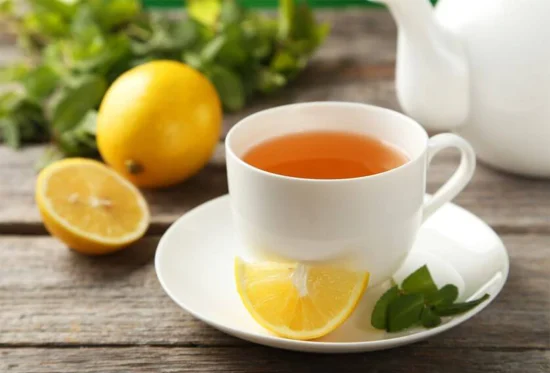
Herbal lemon green tea can be included as part of a broader diabetes-friendly routine.
The most important factors remain:
Tea can support healthy habits, but it cannot replace these fundamentals.
High-quality green tea leaves in this herbal tea boost metabolism with antioxidants. Lemon aids digestion and immunity. Tulsi reduces stress, chamomile calms, ginger soothes digestion, and cinnamon supports blood sugar and heart health.
The formulation contains a combination of herbs and stevia. Each ingredient contributes different plant compounds and traditional uses.
Gurmar (Gymnema sylvestre) is traditionally associated with metabolic and blood sugar wellness. It has also been investigated in clinical studies for glucose-related outcomes.
Amrita or Giloy (Tinospora cordifolia) is traditionally used in Ayurveda and contains various plant compounds. Its presence in the blend does not establish a specific diabetes benefit.
Jamun seed (Syzygium cumini) has a history of traditional use in Indian wellness practices. It has been studied for possible metabolic effects, but stronger human evidence is needed to establish its effectiveness for diabetes management.
Fenugreek (Trigonella foenum-graecum) has been researched for its potential effects on blood glucose and other metabolic markers. Results vary depending on the preparation and dosage studied.
Senna is traditionally used to support bowel regularity. It is different from ingredients specifically studied for glucose management and should not be considered a diabetes treatment.
Triphala is a traditional herbal combination commonly used in Ayurvedic practices. It contains three fruits and is generally associated with digestive and overall wellness.
Tulsi, or holy basil, is traditionally used in Ayurveda and contains several naturally occurring plant compounds. Its inclusion contributes to the herbal profile of the tea.
Stevia provides sweetness without adding table sugar. This can make a sugarless tea a practical option for people who want to reduce added sugar in beverages.
Lemon adds its characteristic citrus flavor and acidity to the tea. It can make the beverage more enjoyable without requiring added sugar.

Herbal lemon green tea can be enjoyed as part of a balanced daily routine.
For preparation, use one tea bag in 100 ml of boiling water and steep for 4–5 minutes. Follow the product label if its preparation instructions differ.
For a diabetes-conscious routine:
Although herbal tea may be suitable for many adults, certain people should seek professional advice before using herbal blends regularly.
Talk to your healthcare professional before using it if you:
Do not change, reduce, or stop prescribed diabetes medication because of herbal tea.
If you experience symptoms associated with low blood sugar, such as shakiness, sweating, dizziness, confusion, or unusual weakness, follow your healthcare provider’s recommended treatment plan.
No. Herbal lemon green tea should not replace diabetes medication or medical care.
Although individual ingredients have been studied for possible effects on glucose metabolism, the evidence does not establish this tea as a treatment for diabetes.
Diabetes management typically requires an individualized combination of nutrition, physical activity, medication when prescribed, and regular monitoring.
Think of herbal lemon green tea as a beverage that may complement these habits—not as an alternative to them.
Herbal lemon green tea can be included in a diabetes-conscious diet, especially when it is sugarless. However, it should not be considered a treatment for diabetes, and evidence for glucose-related benefits remains mixed.
Research findings are mixed. One meta-analysis of 17 randomized controlled trials involving 1,133 participants reported significant reductions in fasting glucose and HbA1c. Another review of seven trials involving 510 participants found no significant effects on several glucose and insulin-related outcomes.
Gurmar (Gymnema sylvestre) has been studied for its potential glucose-related effects. Some research reports improvements in blood sugar markers, but the evidence is not strong enough to consider Gurmar a replacement for standard diabetes treatment.
Many people with diabetes can include unsweetened or sugarless tea in their diet. However, herbal blends may contain multiple ingredients that can interact with medications or affect blood glucose, so individual advice is appropriate.
Stevia can be a practical alternative to table sugar because high-purity steviol glycosides provide sweetness with little to no carbohydrate. However, the overall product formulation matters, and stevia is not a treatment for diabetes.
No. Herbal tea cannot cure diabetes. Some herbs are being researched for potential metabolic effects, but they should be used as complementary dietary choices rather than replacements for medical treatment.
Sneh All-in-One Herbal Lemon Green Tea combines green tea with a blend of traditional herbs and stevia for a convenient sugarless beverage.
The formulation includes Gurmar, Amrita/Giloy, Jamun seed, Methi, Senna, Triphala, Tulsi, and Stevia, along with lemon.
For people looking to reduce added sugar in their regular tea routine, its stevia-sweetened formulation offers an alternative to traditionally sweetened tea.

This article is intended for general educational and informational purposes only. It does not provide medical advice, diagnosis, or treatment.
Herbal lemon green tea and other herbal products should not be used as substitutes for prescribed diabetes medication or professional medical care. If you have diabetes, take glucose-lowering medication, are pregnant or breastfeeding, or have another medical condition, consult a qualified healthcare professional before regularly using herbal supplements or concentrated herbal products.
Anu Sharma – Herbal Tea Specialist with 21+ Years of Experience
Anu Sharma is a herbal tea specialist with more than 21 years of experience in herbal wellness and tea formulation. Through Sneh All-in-One, she focuses on creating practical, easy-to-understand wellness content that helps readers make informed choices about herbal beverages.
The potential benefits of herbal lemon green tea for diabetes come mainly from its combination of green tea and selected herbal ingredients such as Gurmar and fenugreek.
Research on green tea shows mixed results. One meta-analysis found modest improvements in fasting glucose and HbA1c, while another found no significant improvements across several glucose and insulin-related outcomes.
Therefore, herbal lemon green tea can be a convenient sugarless beverage within a healthy lifestyle, but it should not be relied upon to control or treat diabetes.
Lorem ipsum dolor sit amet, consectetur adipiscing elit. Ut elit tellus, luctus nec ullamcorper mattis, pulvinar dapibus leo.

Yes, you can reuse tea bags, and for most everyday teas, two cups from one tea bag is a practical limit. The second cup will
Written by Anu Sharma – Herbal Tea Specialists with 21+ years of experience Neither is objectively better. Choose single-herb tea for simplicity and control, or

Author: Anu Sharma – Herbal Tea Specialists with 21+ Years of Experience Choosing a suitable sugar-free herbal tea starts with checking the ingredient list, sweetener,