What Makes a Good Herbal Tea Blend? A Guide to Ingredients and Quality
A good herbal tea blend combines quality botanicals, balanced proportions, freshness, a clean aroma, suitable packaging and transparent labelling. The number of herbs in the

A good herbal tea blend combines quality botanicals, balanced proportions, freshness, a clean aroma, suitable packaging and transparent labelling. The number of herbs in the pack matters less than the quality and role of each ingredient.
A quality herbal tea blend should contain clearly identified botanicals that look and smell fresh, work well together in flavour, and are packed to protect them from moisture, light and air. A useful starting formulation is 40–60% base ingredients, 20–40% supporting ingredients and 10–20% accent ingredients. For brewing, around 2–2.5 g per 240 ml cup is a practical starting point.
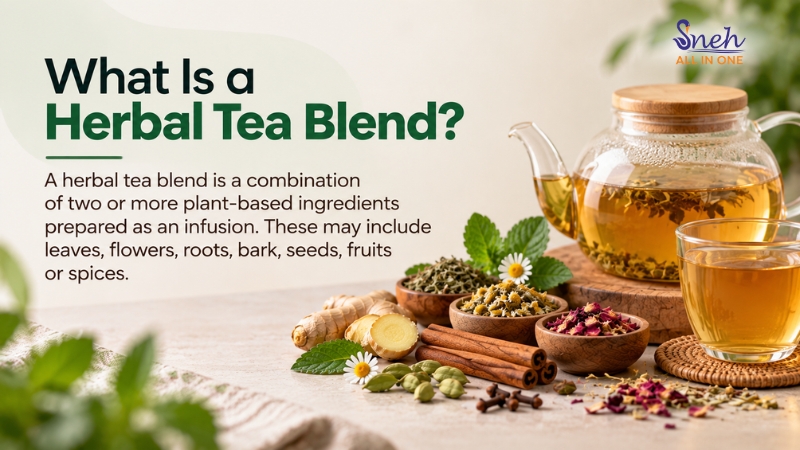
A herbal tea blend is a mixture of two or more plant-based ingredients used to prepare an infusion. These may include leaves, flowers, roots, bark, seeds, fruits or spices.
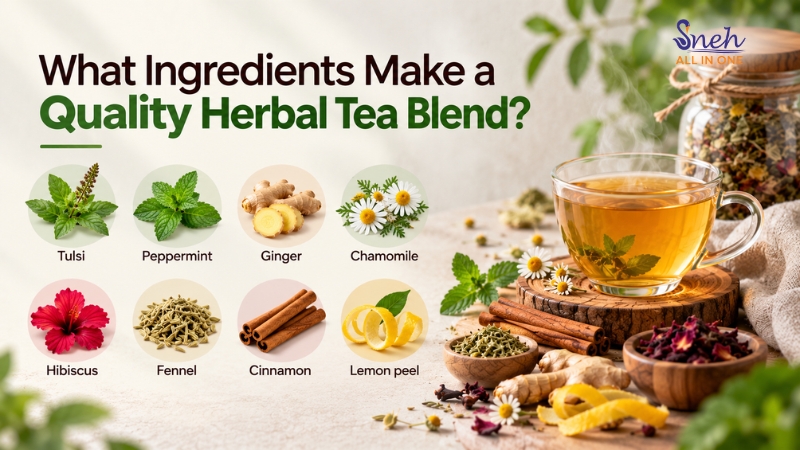
Traditional tea comes from Camellia sinensis, while herbal infusions may contain ingredients such as tulsi, peppermint, chamomile, ginger, fennel and hibiscus.
In India, FSSAI clarified on 24 December 2025 that the term “Tea” is reserved for products derived from Camellia sinensis. Herbal or plant-based infusions that do not come from this plant do not qualify as Tea under that standard. The clarification is identified as File No. RCD-02004/7/2025-Regulatory-FSSAI.
Most simple herbal blends are naturally caffeine-free, but some botanicals, including yerba mate, guayusa, guarana and cocoa husk, contain caffeine. Check the ingredient list if caffeine matters to you.
The best herbal tea blend starts with clean, identifiable and suitable raw materials. Each botanical should contribute something useful to the final cup, whether that is aroma, flavour, colour, sweetness, warmth or body.
Botanical | Typical flavour or aroma |
Tulsi | Fresh herbal aroma with a slightly peppery character |
Peppermint | Clean, cooling mint flavour |
Ginger | Warm, sharp and spicy |
Chamomile | Soft floral aroma with apple-like and hay notes |
Hibiscus | Tart flavour with a deep natural colour |
Fennel | Mild sweetness with a subtle licorice-like note |
Cinnamon | Warm, woody sweetness |
Lemon peel | Bright citrus aroma |
Tulsi, for example, has a strong aromatic character. In a balanced formulation, it should complement the other botanicals rather than completely cover them.
In our experience, moisture is one of the first raw-material issues to watch closely. Botanicals that absorb moisture can lose intended texture and aroma and may begin to clump during storage. That is why we pay close attention to the condition of each botanical before it becomes part of a finished blend.
Watch for excessive stems, fine dust, faded colour, moisture clumping or a uniform brown appearance. These signs do not automatically prove poor quality, but they deserve closer inspection.
A fresh botanical should smell recognisably like itself. For example, good chamomile has a soft, sweet apple-and-hay aroma. A strong perfume-like, chemical or stale odour is a warning sign.
A good herbal tea blend needs balance rather than a long list of ingredients. One practical formulation framework is:
A simple way to visualise this is 4 parts base + 2 parts support + 1 part accent.
For example, a blend built around tulsi may use another mild botanical to soften its strong herbal character and a smaller amount of ginger or lemon peel for warmth or brightness.
From our experience developing herbal formulations, small changes in the proportion of a strong botanical can noticeably change the final cup. We therefore adjust the proportions according to the strength and character of each botanical so that one ingredient does not overpower the rest of the blend.
More ingredients do not automatically make a better blend. Five well-balanced botanicals can produce a cleaner and more enjoyable cup than ten ingredients that compete with each other.
For brewing, around 2–2.5 g of blend per 240 ml cup is a practical starting point. One teaspoon is often close to 2 g, although density varies between botanicals and blends.
Many herbal blends benefit from a 10–15 minute covered infusion to extract flavour and aroma effectively. Always follow the specific brewing instructions provided on the product.
Freshness directly affects the aroma, colour and flavour of an herbal tea blend. Older botanicals can gradually lose their natural colour and volatile aroma compounds, resulting in a flatter cup.
A quality blend should have a clean, recognisable aroma before brewing and a clear flavour after brewing. The infusion should not taste excessively dusty, stale or harsh unless that character naturally comes from a particular botanical.
Good storage also matters. Herbal blends should be kept in packaging that protects them from moisture, excessive light, air and strong surrounding odours.
Format | What to look for |
Loose herbal blend | Visible botanicals, limited dust and a fresh aroma |
Standard tea bag | Suitable material, adequate filling and good sealing |
Pyramid sachet | Enough space for larger botanical pieces to infuse properly |
Loose leaf is not automatically better than tea bags. The quality of the raw material, processing, packaging and storage has a greater effect on the final product.
The label tells you more than the front-of-pack marketing. Before buying, check whether the product provides clear information about what is inside the pack and who is responsible for it.
FSSAI’s Food Safety and Standards (Labelling and Display) Regulations, 2020 set requirements for packaged food labelling.
Look for:
Quality testing may include checks for microbial quality, pesticide residues, contaminants and heavy metals, depending on the product and applicable requirements. Testing claims are more useful when a brand clearly identifies what was tested and the relevant standard or certification.
For more guidance on evaluating tea products before buying, see our guide to choosing quality tea online.
Compare what you can see, smell and verify before buying.
Good signs | Warning signs |
Clearly identifiable leaves, flowers, roots or spices | Excessive dust or powder |
Natural, characteristic aroma | Perfume-like or chemical smell |
Distinct botanical colours | Uniform dull or brown appearance |
Clear ingredient information | Vague or incomplete ingredient descriptions |
Dry and free-flowing material | Moisture-related clumping |
Balanced flavour | One harsh ingredient dominates |
Clear manufacturer and FSSAI details | Missing or unclear product information |
From our experience, consistency is just as important as appearance. The same formulation should produce a reasonably similar aroma, colour and flavour from batch to batch. Seasonal humidity, moisture in raw materials and storage conditions can all affect the final cup even when the recipe remains unchanged.
Price alone does not determine quality. The cost of an herbal tea blend can depend on the botanicals used, availability, processing, testing, packaging, format and supply chain.
An India-focused comparison checked on 11 September 2026 showed that some 100 g herbal tea products were available around ₹200–₹300, while specialty 100 g products were priced above ₹600. Tea-bag packs can also cost more per gram because of individual sachets and additional packaging. These are retail examples rather than an official market benchmark, and prices can change.
When comparing products, look at:
A lower price may reflect inexpensive bulk botanicals or a simple formulation, while a higher price may include premium botanicals, specialised packaging or additional quality controls. The product label and overall quality should justify the price difference.
Use this five-point checklist:
Check | What to look for |
1. Read the ingredients | Make sure every botanical is clearly identified. |
2. Inspect the material | Look for recognisable pieces rather than excessive dust or stems. |
3. Smell the blend | Look for a natural, characteristic aroma without musty or artificial odours. |
4. Check the label | Verify FSSAI details, dates, storage and manufacturer information. |
5. Compare value | Consider ingredients, pack size, format, packaging and quality controls. |
A practical starting framework is 40–60% base ingredients, 20–40% supporting ingredients and 10–20% accent ingredients.
Look for identifiable botanicals, a natural aroma, clear labelling, dry material and balanced flavour; excessive dust, clumping or artificial odours are warning signs.
No. A smaller number of well-balanced botanicals can produce a better cup than a long list of ingredients that compete with each other.
Many herbal blends are naturally caffeine-free, but some botanicals such as yerba mate, guayusa and guarana contain caffeine. Check the ingredient list.
It depends on the ingredients, quantity and your individual health circumstances. If you are taking medication, pregnant or breastfeeding, or managing a health condition, consult a qualified healthcare professional before regular use.
Around 2–2.5 g per 240 ml cup is a practical starting point, although the ideal amount varies by blend and botanical density.
A covered infusion of around 10–15 minutes is a useful starting point for many herbal blends. Follow the product’s specific brewing instructions when provided.
Store them in a dry, airtight or well-sealed package away from direct light, moisture, heat and strong odours.
A good herbal tea blend is not simply a mixture of many herbs. It starts with clean, identifiable botanicals, uses sensible proportions, maintains a fresh aroma and flavour, and is packed and labelled responsibly.
With more than 21 years of experience in herbal tea manufacturing, SNEH All In One – Naturally Crafted Teas focuses on ingredient identity, formulation balance, consistency and the overall quality of the finished infusion.
Anu Sharma – Herbal Tea Specialist with 21+ Years of Experience
Anu Sharma is the founder of SNEH All In One – Naturally Crafted Teas, a brand focused on naturally crafted herbal tea blends and herbal infusions. She brings more than 21 years of experience in herbal tea manufacturing and formulation to the development of its products.
This article is intended for general educational purposes. Herbal ingredients can affect people differently and may interact with medicines or health conditions. If you are pregnant, breastfeeding, taking medication or managing a health condition, consult a qualified healthcare professional before regularly using herbal products.

A good herbal tea blend combines quality botanicals, balanced proportions, freshness, a clean aroma, suitable packaging and transparent labelling. The number of herbs in the
To understand herbal tea ingredients before buying, read the ingredient list instead of relying only on the product name or front-of-pack claims. Check the order
Yes, you can reuse tea bags, and for most everyday teas, two cups from one tea bag is a practical limit. The second cup will