Can You Reuse Tea Bags? How Many Times Can You Steep One?
Yes, you can reuse tea bags, and for most everyday teas, two cups from one tea bag is a practical limit. The second cup will

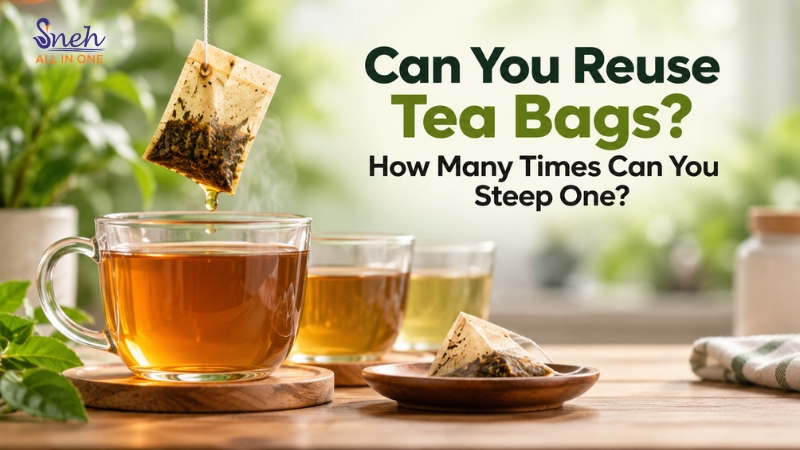
Yes, you can reuse tea bags, and for most everyday teas, two cups from one tea bag is a practical limit. The second cup will generally be lighter because much of the readily extracted flavor has already been released during the first brew.
Green, white, and some oolong teas may work well for a second infusion, while black teas and some herbal blends can become noticeably weaker. How well a tea bag can be reused also depends on the tea leaves, bag design, brewing time, and how quickly the used bag is reused.
Quick answer: For most everyday teas, one tea bag can make two cups in total. Some whole-leaf teas can be steeped more than twice, but that is different from repeatedly reusing an ordinary tea bag.
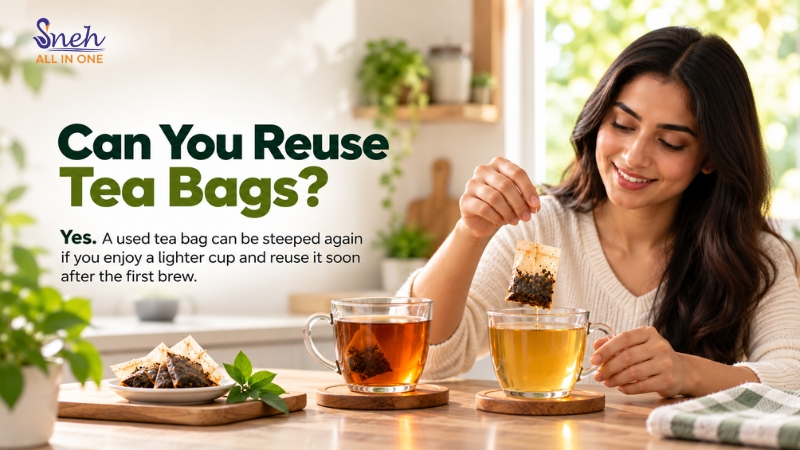
Yes. A used tea bag can be steeped again if you enjoy a lighter cup and reuse it soon after the first brew.
During the first steep, hot water extracts soluble compounds from the leaves. The amount extracted varies according to factors such as tea type, leaf size, water temperature, and steeping time. This is why the second infusion usually has less intensity than the first.
Reusing is therefore more about getting another enjoyable, lighter cup than expecting the same strength from the original brew.
For most everyday tea bags, one reuse is a sensible general rule. A second cup can still have enough flavor to be enjoyable, but a third cup is less predictable.
Some high-quality whole-leaf teas are specifically suited to multiple infusions. These teas can retain flavor across several short steeps because larger leaves release their compounds gradually. This is different from an ordinary tea bag containing smaller tea particles, where much of the flavor may be extracted during the first cup.
Your preferred strength also matters. If the second cup tastes watery or flat, there is little benefit in trying to stretch the same bag further
The type of tea and the design of the bag both affect the second infusion.
Tea type | Second steep | What to expect |
Often suitable | Lighter and smoother flavor | |
White tea | Often suitable | Delicate second infusion |
Oolong tea | Often suitable | Can retain noticeable flavor |
Black tea | Sometimes suitable | Usually weaker |
Herbal blends | Depends on formulation | Varies by ingredients |
Pyramid tea bags may be better suited to reuse than traditional flat bags when they contain larger tea leaves. Their shape can give the leaves more room to expand during brewing.
Traditional flat bags often contain smaller tea particles that can release flavor relatively quickly. However, bag shape alone does not determine whether a second steep will be good. The tea formulation, leaf size, quantity, and brewing method are also important.
The first infusion normally extracts many of the compounds that dissolve readily in hot water. Because some of these compounds have already moved into the first cup, the second infusion generally has a lighter flavor.
Different compounds can also be extracted at different rates. This means that the second cup may not simply be a weaker version of the first; its flavor profile can change as well.
For this reason, increasing the steeping time slightly may help the second cup, but leaving the used bag in hot water for an excessive amount of time can produce an unpleasantly bitter or astringent taste.
If you want to reuse a tea bag, follow these simple steps:
The best approach is to make the second cup soon after the first. Once the dry leaves become wet, they need to be handled more carefully.
Avoid leaving a used bag on the counter for several hours or overnight.
Prepare the second cup with fresh water at a suitable temperature for the particular tea. Different teas can require different brewing conditions.
A second infusion may need slightly more steeping time because some flavor has already been extracted.
Do not assume that much longer steeping will produce a stronger cup. Too much time can change the taste rather than simply increasing strength.
If the second cup still smells fresh and tastes pleasant, enjoy it. If it tastes flat, stale, or unpleasant, use a fresh tea bag instead.
It is best not to leave a wet tea bag at room temperature overnight and then reuse it the next day.
Wet tea leaves contain moisture and plant material, so prolonged room-temperature storage can create conditions that allow microorganisms to grow. If you want to keep a used bag for later, refrigerate it promptly in a clean, covered container.
For the simplest approach, reuse it shortly after the first cup. Discard it if it develops an unusual smell, visible mould, or other signs of spoilage.
The second cup may contain less caffeine because some caffeine is extracted during the first infusion. However, the exact amount remaining depends on the tea variety, leaf size, water temperature, and steeping time.
Therefore, reusing a tea bag may produce a lower-caffeine cup, but it should not be treated as a reliable way to make tea caffeine-free.
If you are specifically managing caffeine intake, choosing a naturally low-caffeine or caffeine-free tea is a more predictable approach.
Yes. If you regularly enjoy a lighter second cup, reusing a suitable bag can help you get more than one serving from the same portion of tea.
For example, a 20-bag box could provide up to 40 cups instead of 20 if every bag is reused once and each second infusion is still enjoyable. This is a simple way to understand the potential saving, although the actual number of satisfying cups depends on the tea and your preferred strength.
However, saving money should not mean keeping a wet tea bag for too long. Freshness and safe handling should come first.
If a used tea bag is no longer suitable for another cup, some people repurpose it for non-drinking uses such as composting, odor absorption, or certain household and gardening applications.
These uses depend on the tea-bag material and what is inside the blend. A tea bag that contains additives or non-compostable materials should not automatically be placed in compost.
For drinking purposes, however, there is no need to keep reusing a bag once the flavor or freshness has clearly declined.
No. Reusing a tea bag is a personal preference, and many people do it simply because they enjoy a milder second cup or want to reduce waste. There is nothing unusual about the practice as long as the used bag is handled hygienically.
You can, but one bag will usually produce a lighter drink when divided between two cups. If both people prefer mild tea, this may work; if they prefer stronger flavor, using a fresh bag for each cup is more practical.
Whole leaves, a suitable tea variety, and a brewing method designed around shorter infusions can allow some teas to retain flavor across multiple steeps. This is why certain loose-leaf teas can be brewed several times without being treated as a used tea bag.
Most of the easily extracted flavor may already have been released during the first infusion. A longer second steep can sometimes improve the strength, but if the flavor remains weak or flat, using a fresh bag is the better option.
Yes. The second infusion can be lighter and may have a different balance of flavor and aroma because different compounds are extracted at different rates. The result depends on the tea type and brewing conditions.
Can you reuse tea bags? Yes, and for most everyday teas, one tea bag can make two cups in total. Green, white, and some oolong teas may remain enjoyable during a second infusion, while black teas and some herbal blends can become weaker.
Pyramid bags containing larger leaves may also perform better during reuse than flat bags with smaller tea particles. Some whole-leaf teas are designed for several infusions, but that should not be confused with repeatedly steeping an ordinary tea bag.
For the best results, reuse the bag soon after the first cup, use fresh hot water, adjust the steeping time slightly if needed, and avoid leaving wet tea at room temperature overnight.
Anu Sharma is a herbal tea specialist with 21+ Years of Experience in herbal tea manufacturing and formulation. Her experience informs practical guidance on tea preparation, ingredients, and everyday tea use.

Yes, you can reuse tea bags, and for most everyday teas, two cups from one tea bag is a practical limit. The second cup will

Written by Anu Sharma – Herbal Tea Specialists with 21+ years of experience Neither is objectively better. Choose single-herb tea for simplicity and control, or
Author: Anu Sharma – Herbal Tea Specialists with 21+ Years of Experience Choosing a suitable sugar-free herbal tea starts with checking the ingredient list, sweetener,