How to Choose the Right Herbal Kadha Tea
Author: SNEH All In One Team A good herbal kadha tea has clearly listed ingredients, suitable caffeine levels, simple brewing instructions and reliable packaging and

Author: Anu Sharma – Herbal Tea Specialist with 21+ Years of Experience
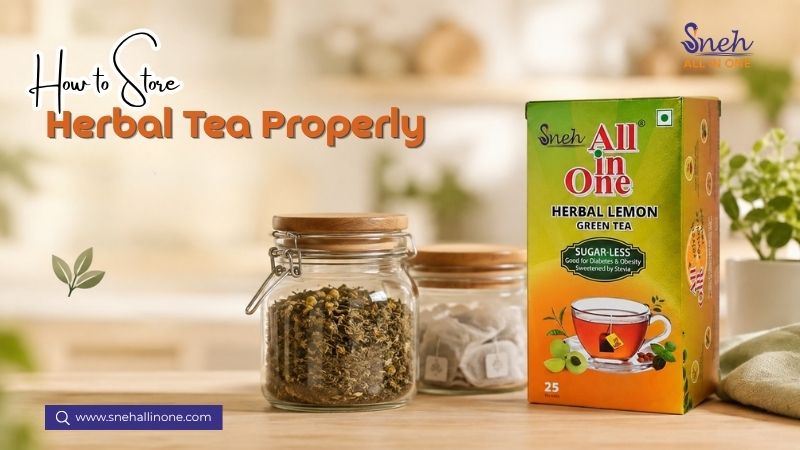
The best way to store herbal tea is to keep it in an airtight, opaque container in a cool, dark and dry cupboard, away from sunlight, heat, humidity and strong odors.
For most dried herbal teas, proper storage helps preserve aroma and flavor for around 12–24 months, depending on the ingredients, packaging and storage conditions. Always use the manufacturer’s printed best-before date as your primary guide.
Rule of thumb: Store herbal tea in an airtight, opaque container in a cool, dark, dry cupboard-away from the stove, sink and strong odors.
After more than 21 years of working with herbal tea, I have found that people often focus too much on the container and not enough on where and how they use it. A good tin cannot protect tea if it is repeatedly opened beside a steaming kettle or stored in a humid kitchen.
The herbal tea shelf life varies according to the ingredients, packaging and storage environment.
Condition | Expected quality / shelf life |
Unopened, properly sealed | Best until the printed best-before date |
Opened, stored properly | Around 12–24 months for most dried herbal teas |
Frequently exposed to air or humidity | Freshness may decline sooner |
Delicate flowers and highly aromatic herbs | Often best within around 12–18 months |
Roots, spices and denser botanicals | May retain quality for around 18–24+ months |
Damp, moldy or contaminated | Discard immediately |
These are practical quality guidelines, not guarantees. Always follow the manufacturer’s storage instructions and best-before date.
Different botanicals do not retain freshness in exactly the same way.
Around 12–18 months:
Chamomile, hibiscus, rose and lavender are examples of delicate botanicals that can gradually lose their aroma and character.
Around 18–24+ months:
Peppermint, lemongrass, ginger, cinnamon and fennel may retain their quality longer when kept properly sealed and dry.
So, how long does herbal tea last depends on more than the date printed on the packet. Ingredients and storage conditions both matter.
Best-before is primarily about quality, not automatically about safety. Dried herbal tea generally loses aroma and flavor gradually rather than suddenly becoming unusable on a particular date.
However, never consume tea simply because its date has not passed if it shows signs of contamination.
If tea develops visible mold, insect infestation, dampness or an unusual musty smell, discard it.
My rule is simple: if the tea looks or smells wrong, don’t try to rescue it just because the date looks acceptable.
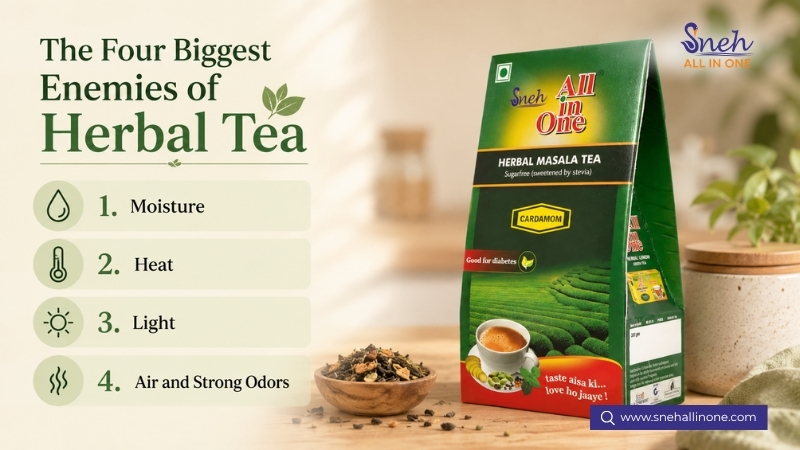
Good herbal tea storage becomes much easier when you understand what damages dried tea.
Humidity is one of the biggest problems, especially during India’s monsoon season.
Dried herbs can absorb moisture from surrounding air. Repeatedly opening a container in a humid kitchen allows moisture to enter over time.
Storage tips:
Heat can gradually reduce the quality of aromatic ingredients.
Avoid storing herbal tea:
A cupboard that stays relatively cool is usually better than a convenient shelf beside your kettle.
Direct sunlight can gradually affect dried herbs and their natural aromatic compounds.
A transparent jar sitting on a bright kitchen counter may look attractive, but it is not necessarily the best way to store tea for long-term freshness.
If you use a glass jar, keep it inside a dark cupboard. An opaque container is even better.
Repeated air exposure can reduce freshness, while strong kitchen smells can transfer into dried tea.
Keep herbal tea away from:
Your tea may remain completely dry but still taste different because it has absorbed another smell.
For everyday use, I recommend an airtight, opaque container with a secure lid.
Good options include:
The important feature is not how expensive the container looks. It is whether it protects the tea from moisture, air, light and odors.
Avoid leaving herbal tea in an open bowl or loosely folded paper packet for long periods.
Do not mix different herbal blends in one container. Each blend should have its own storage space because aromatic ingredients can transfer their smells and flavors.
Loose herbal tea needs slightly more attention because the ingredients are directly exposed whenever you open the container.
For how to store loose leaf herbal tea, transfer it into a clean, completely dry, airtight container if the original package is not suitable for long-term storage.
Try to:
A useful habit is to use older tea before opening a newer packet. This simple first-in, first-out approach prevents forgotten tea from sitting at the back of the cupboard for years.
For everyday dried herbal tea, do not store it in the refrigerator or freezer unless the manufacturer specifically instructs you to do so.
Refrigerators and freezers can expose tea to condensation when containers are repeatedly removed and opened. They can also expose tea to strong food odors.
For most dried herbal tea, a cool, dry and dark cupboard with stable conditions is a better choice.
The exception is when a manufacturer specifically recommends refrigeration for a particular product, such as certain fresh blends or products with different storage requirements.
India’s summer heat and monsoon humidity make storage conditions particularly important.
The storage method that works during a dry winter may not work as well when humidity rises.
My preferred setup is:
Airtight container → cool interior cupboard → away from stove and sink → dry spoon → minimum opening time.
During humid weather, follow these additional habits:
If you live in a particularly humid area, these small habits can make a noticeable difference to freshness.
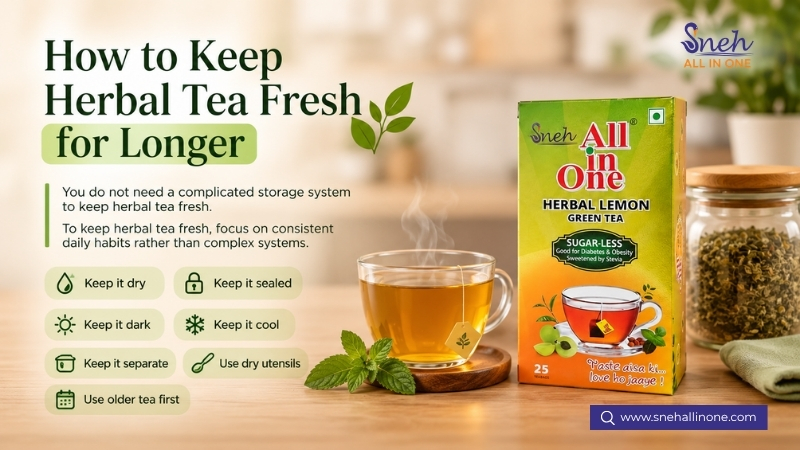
You do not need a complicated storage system to keep herbal tea fresh.
To keep herbal tea fresh, focus on consistent daily habits rather than complex systems.
Use this quick checklist:
The best storage routine is the one you can follow consistently.
Before brewing older tea, check it visually and by smell.
Look for these signs in order of seriousness:
Faded aroma or flat taste: The tea may have lost some of its freshness but may not be spoiled.
Stale or papery smell: This can indicate prolonged air exposure.
Musty or sour smell: Avoid drinking tea with an unusual odor.
Clumping or dampness: This indicates moisture exposure.
Unusual discoloration: A significant change in appearance warrants caution.
Visible mold or insects: Discard the tea immediately.
A simple aroma test is surprisingly useful. Fresh herbal tea should retain a recognizable scent from its ingredients. If the fragrance has almost completely disappeared, the tea may still look normal but can produce a noticeably flat cup.
If you see mold or suspect moisture contamination, discard the tea rather than trying to dry it again.
Keeping tea in a clear jar on the counter → Move it into a dark cupboard.
A clear container allows light exposure, especially when placed near a window.
Storing tea beside the stove → Move it away from heat.
Repeated heat exposure can gradually reduce aroma and quality.
Using a wet spoon inside the container → Use a completely dry spoon.
Even small amounts of moisture can create storage problems.
Leaving the lid open → Close it immediately.
Every unnecessary opening exposes the tea to air and potentially humid kitchen conditions.
Mixing different blends → Give each blend its own container.
This helps prevent aromas from transferring between different teas.
Buying more than you can use → Buy quantities you can reasonably finish.
A large supply is not automatically better value if it remains stored for years.
Storing tea beside spices → Use a separate cupboard or section.
Dried tea can absorb strong surrounding odors.
If you remember only a few tea storage tips, remember these:
Dry + airtight + dark + cool + odor-free = better tea freshness.
Keep your tea away from the stove, sink, sunlight and strong-smelling foods.
Use dry utensils and close the container immediately after every use.
For Indian homes, pay extra attention to humidity during the monsoon and heat during summer.
Most dried herbal teas can retain good quality for around 12–24 months after opening when stored properly. However, delicate ingredients may lose aroma sooner, so use the manufacturer’s best-before date and check the tea’s smell and appearance.
Dried herbal tea generally loses flavor and aroma gradually rather than suddenly becoming unusable. However, tea exposed to moisture can develop mold or contamination and should be discarded.
Generally, no. Refrigeration and freezing can create condensation and expose tea to food odors. Only refrigerate or freeze a product if the manufacturer specifically recommends it.
Look for mold, insects, dampness, unusual discoloration or a musty or sour smell. If any of these signs appear, discard the tea.
An airtight, opaque, food-safe container is a practical choice. Keep it in a cool, dark and dry cupboard away from sunlight, heat, moisture and strong odors.
Use airtight containers, keep tea away from the sink and stove, use dry spoons, check container seals and inspect tea for clumping or unusual odors after periods of high humidity.
You do not need an expensive tea cabinet or complicated preservation system.
The most reliable approach to storing herbal tea is straightforward: use an airtight container, keep it cool and dark, protect it from humidity, and keep it away from strong odors.
For Indian homes, paying particular attention to heat and humidity can make a noticeable difference. Store your tea away from the stove and sink, use dry utensils, and avoid opening containers more often than necessary.
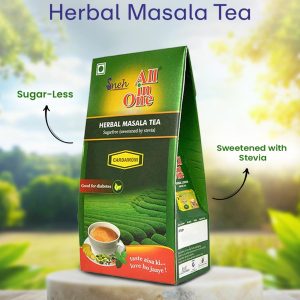
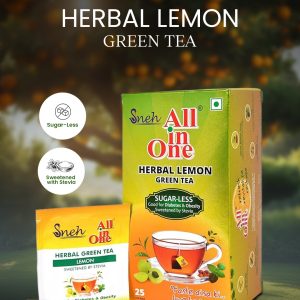
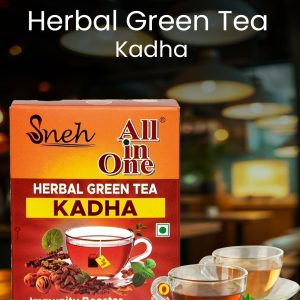
At Sneh All In One, we believe good tea care starts before the first cup is brewed. Whether you keep Herbal Lemon Tea, Herbal Masala Tea or Herbal Green Tea Kadha at home, proper storage helps you enjoy the aroma and flavor as intended.
A little care in the cupboard can protect a lot of freshness in your cup.
Anu Sharma – Herbal Tea Specialist with 21+ Years of Experience
Anu Sharma writes about herbal tea preparation, storage and everyday wellness practices, combining practical tea experience with reader-focused guidance. Her approach emphasizes simple, responsible habits rather than exaggerated health claims.
This article provides general information about storing dried herbal tea. Always follow the storage instructions and best-before date provided by the tea manufacturer. Discard tea showing visible mold, insect infestation, dampness or other signs of spoilage.

Author: SNEH All In One Team A good herbal kadha tea has clearly listed ingredients, suitable caffeine levels, simple brewing instructions and reliable packaging and
Author: SNEH All In One Editorial TeamReviewed by: SNEH All In One Herbal Tea Specialists Our SNEH All In One green-tea-based Herbal Masala Tea is

Written by: Anu Sharma – Herbal Tea Specialist with 21+ Years of ExperienceBrand: SNEH All In One – Naturally Crafted Teas Brand Disclosure: This guide