How to Choose the Right Herbal Kadha Tea
Author: SNEH All In One Team A good herbal kadha tea has clearly listed ingredients, suitable caffeine levels, simple brewing instructions and reliable packaging and


Up to 80% of women suffer menstrual cramps each cycle. In my Delhi clinic, I’ve seen scores of patients relieved by a simple remedy: hot herbal lemon tea. This comforting blend – often featuring ginger, chamomile, mint and fresh lemon – can ease pain naturally. Herbal lemon tea (sometimes called lemon herbal tea) harnesses soothing spices to relax uterine muscles and reduce inflammation, helping many women get relief without medication. In this post, I’ll explain how it works, its benefits and recipes, plus share real reviews and safety tips for optimal relief.
Herbal lemon tea isn’t just plain lemon juice in hot water. It’s a blend of botanicals brewed into a fragrant tea. Key ingredients often include ginger (a natural anti-inflammatory), lemon (vitamin-C rich citrus), chamomile (a mild muscle relaxant), and mint (peppermint or spearmint). In Ayurveda, such teas are considered “warming” and balancing for the cycle. For example, the Sneh All-in-One Herbal Lemon Tea is an Ayurvedic premix containing lemon extract, ginger (as “dry ginger” or shunthi), tulsi (holy basil), and other spices. Sipping this blend warm can ease muscle spasms and fatigue. Lemon juice adds tang and vitamin C, which supports blood flow, while herbs like ginger and chamomile block pain signals and prostaglandin production. Many women find the steam and warmth of the tea itself also soothes tense muscles.
Herbal lemon tea offers several cramp-busting benefits:
Most importantly, these effects are backed by research. For example, clinical trials show ginger supplements significantly lessen period pain severity. Chamomile tea trials found it effectively reduces cramps and bleeding. Peppermint tea has been shown to relax uterine muscles and inhibit uterine prostaglandins. Together, the blend of herbal lemon tea benefits provides a gentle, holistic remedy during menstruation.
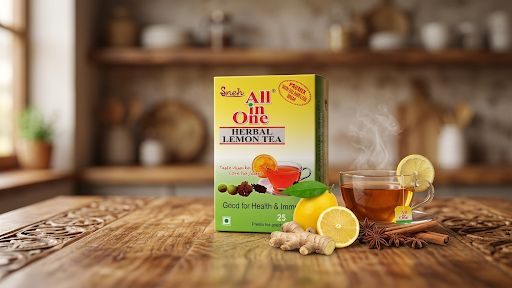
One standout product is Sneh All-in-One Herbal Lemon Tea. This Ayurvedic tea premix (AYUSH-approved) combines lemon, ginger (dry ginger), tulsi, ajwain, cumin and other herbs in each sugar-free sachet. It’s free of caffeine and made with sulphur-less sugar, so it’s safe for daily sipping. In practice, Sneh’s blend offers all the natural pain-relief we’ve discussed: anti-spasmodic ginger, relaxing mint/tulsi, and vitamin-C rich lemon. Users praise its tangy flavor and calming warmth. Compared to plain “lemon herbal tea” (just hot lemon water), this tea adds extra spice power: traditional Indian herbs like tulsi and black pepper which, according to the AYUSH ministry, enhance immunity and circulation. In short, Sneh’s ready-made mix packs the stress-relief of multiple herbs in one cup, making it easy to drink 1–2 cups a day for best results.
Key Ingredient | Pain-Relief Benefit | Evidence |
Ginger (Zingiber officinale) | Reduces prostaglandin production (anti-inflammatory) and relaxes muscles. Clinically shown to significantly reduce dysmenorrhea pain. | Gingerol compounds inhibit COX enzymes, blocking pain-causing prostaglandins. |
Chamomile (Matricaria chamomilla) | Mild sedative and antispasmodic. Inhibits prostaglandins/leukotrienes, reducing uterine cramping. | A systematic review found chamomile “effective… for primary dysmenorrhea”. |
Mint (Peppermint; Mentha piperita) | Contains menthol, a smooth-muscle relaxant. Inhibits uterine contractility and prostaglandin, easing cramps. | Trials show peppermint capsules significantly lower pain severity in dysmenorrhea. |
Lemon (Citrus limon) & Vit C | Anti-inflammatory vitamin C supports blood vessels. Citrus flavonoids further reduce inflammation. | Diets high in vitamin C (lemons, oranges) can improve uterine blood flow and modestly ease cramps. |
Each of these ingredients has been scientifically linked to menstrual pain relief. Together in a ginger-lemon tea, they synergize: ginger and peppermint block inflammatory mediators, chamomile soothes muscle spasms, and lemon adds Vitamin C to reduce swelling.
Making herbal lemon tea is quick and flexible. You can use a ready mix like Sneh, or brew from scratch:
Variations: You can also add other spices like cinnamon or cardamom, or a teabag of green tea for extra antioxidant boost. Use milk (as “lemon masala tea”) if you prefer. Just avoid over-boiling, as high heat may destroy vitamin C. Sipping 1–2 cups through your period can maximize relief.
Nutrient (per 1 cup prepared with honey) | Amount |
Calories | ~64 kcal |
Total Fat | 0 g |
Sodium | 1 mg |
Total Carbohydrates | 17 g (sugars) |
Protein | 0 g |
Vitamin C | ~8 mg |
Nutrition facts are approximate (includes 1 tsp honey). Herbal lemon tea is low in calories and hydrating, making it a healthier alternative to caffeinated drinks.
For optimal relief, drink 1–2 cups daily during your period (one cup in the morning and one in the evening works well). Start a day or two before cramps hit, so anti-inflammatory herbs are in your system. Each sachet of Sneh All-in-One tea is designed for one cup: simply pour the powder into a mug, add hot water, and stir until dissolved. Sip slowly, inhaling the warm steam to soothe discomfort. Adding a little honey or rock salt (rock salt is Ayurvedic recommended) can enhance absorption. It’s best on an empty stomach or between meals, allowing herbal compounds to act directly on the muscles. Remember, consistency helps: a daily cup during your period is better than a single dose. As per the Ministry of AYUSH, herbal decoctions of tulsi, ginger and spices twice a day (with lemon juice added) are advised for overall relief.
These testimonials (anonymized) highlight what many women feel: herbal lemon tea is a natural, gentle remedy that helps soothe cramps when conventional meds fail or aren’t desired.
Question | Answer |
Can I drink herbal lemon tea while pregnant or breastfeeding? | Ginger and chamomile are generally safe in food amounts, but always ask a doctor during pregnancy/nursing. Some herbs cross the placenta or affect hormones. Minor consumption (1 cup) is usually fine, but medical advice is best. |
Any side effects or interactions? | Ginger and peppermint can cause mild heartburn or diarrhea in some people. Ginger is a natural blood thinner; if you have a bleeding disorder or take blood-thinning meds, consult a physician. Avoid excessive drinking (>3 cups/day) to prevent nausea. |
What if cramps worsen or don’t improve? | Period pain should not be disabling. If herbal teas and home care fail, or if you have very heavy bleeding, irregular cycles, or severe pain every month, see a doctor. Persistent dysmenorrhea could signal endometriosis or fibroids. |
Can I mix with medications? | Generally yes, but check any herb-drug interactions. For example, high doses of ginger might alter blood sugar or blood pressure. When in doubt, separate tea from medicines by a couple of hours and ask a pharmacist or doctor. |
How long until effects? | Effects can be noticed in the first few cups or after 1–2 days of regular use. If you feel relief (less pain, softer cramps) within one period of use, it’s working. Keep hydrating and resting with the tea for continued benefit. |
These precautions ensure safe use. Always read labels and follow dosage instructions. Medical disclaimer: Herbal teas are not a substitute for medical care; consult your doctor for severe symptoms or before starting any new supplement, especially if you are on medications, pregnant, or have chronic conditions.
If you have more questions, consult a qualified healthcare professional.
Herbal lemon tea is a time-tested, natural remedy for period pain. Try Sneh All-in-One Herbal Lemon Tea today for a warm, soothing approach to period pain relief. This natural blend of ginger, tulsi, lemon and more is designed specifically to support women’s comfort during menstruation.
This post is for information only and not a substitute for medical advice. Consult a qualified healthcare provider before starting any new remedy, especially if you have health conditions or take medications.

Author: SNEH All In One Team A good herbal kadha tea has clearly listed ingredients, suitable caffeine levels, simple brewing instructions and reliable packaging and

Author: SNEH All In One Editorial TeamReviewed by: SNEH All In One Herbal Tea Specialists Our SNEH All In One green-tea-based Herbal Masala Tea is

Written by: Anu Sharma – Herbal Tea Specialist with 21+ Years of ExperienceBrand: SNEH All In One – Naturally Crafted Teas Brand Disclosure: This guide