Single-Herb vs Herbal Tea Blends: Which Should You Choose?
Written by Anu Sharma – Herbal Tea Specialists with 21+ years of experience Neither is objectively better. Choose single-herb tea for simplicity and control, or

Written by Anu Sharma – Herbal Tea Specialists with 21+ years of experience
Neither is objectively better. Choose single-herb tea for simplicity and control, or choose herbal tea blends for variety and convenience. The right option depends on your wellness goal, taste preference, ingredient sensitivity, and daily routine.
When choosing herbal tea, many people focus on finding the “best” product. However, an equally important question is whether you need one herb or a combination of herbs.
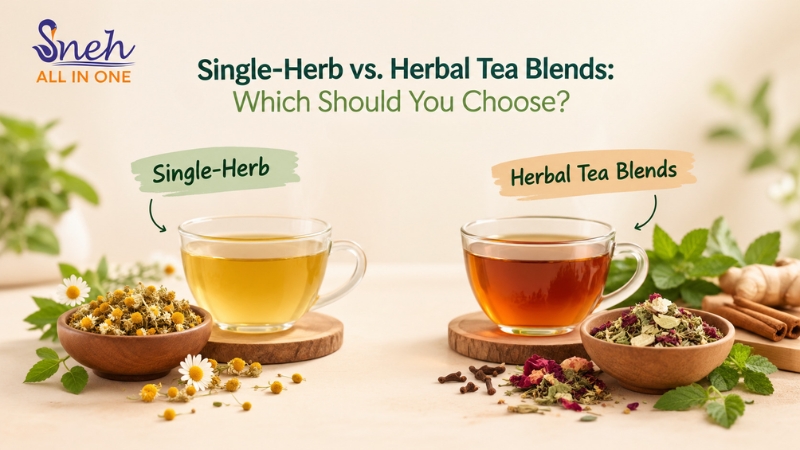
A single-herb tea contains one primary botanical ingredient, such as ginger, chamomile, peppermint, or tulsi. A blend combines several herbs, spices, flowers, roots, or other botanicals.
Both options can fit into a balanced lifestyle. The better choice depends on what you want from your cup of tea.
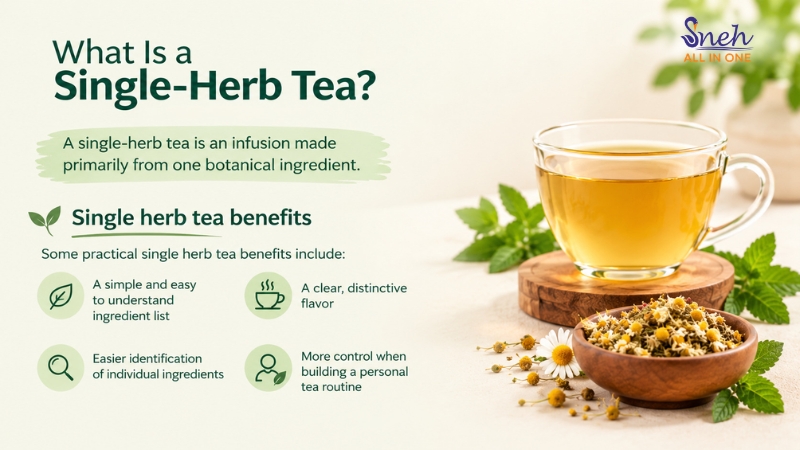
A single-herb tea is an infusion made primarily from one botanical ingredient.
For example, ginger tea focuses on ginger, while chamomile tea focuses on chamomile. Because there is one main ingredient, the flavor, aroma, and overall character of the tea are easier to identify.
The biggest advantage is simplicity.
If you are trying a botanical for the first time, starting with one ingredient can make it easier to understand its taste and notice how you personally respond to it.
Some practical single herb tea benefits include:
A single ingredient does not automatically make a tea stronger or more effective. It simply gives you a more focused formulation.
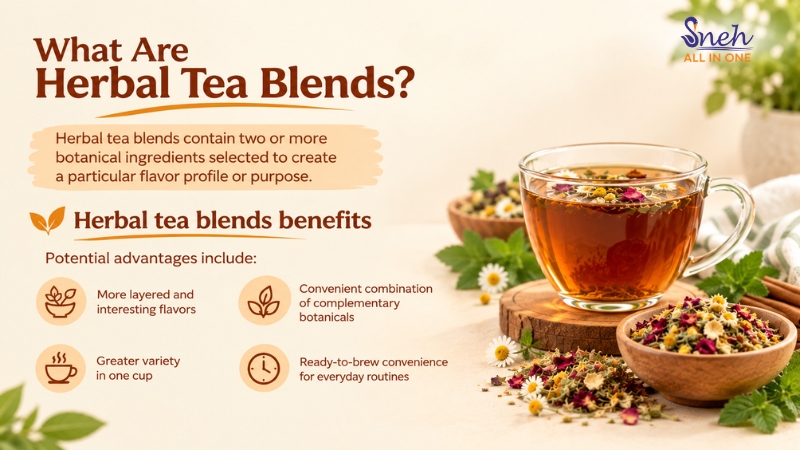
Herbal tea blends contain two or more botanical ingredients selected to create a particular flavor profile or purpose.
For example, a formulation might combine ginger with tulsi, fennel, cinnamon, or other herbs and spices. Each ingredient contributes its own taste and characteristics.
However, a good blend is not simply a long list of ingredients.
A thoughtfully designed formulation considers which herbs work well together, their proportions, their flavors, and the intended use of the finished tea.
This is why a blend’s benefits should be judged by formulation quality rather than ingredient count.
Potential advantages include:
More ingredients do not automatically mean more benefits. A blend should have a clear reason for combining its ingredients.
The table below gives you a quick way to compare the two options before deciding which formulation fits your routine.
Feature | Single-Herb Tea | Herbal Tea Blend |
Ingredients | One primary herb | Multiple herbs or botanicals |
Flavor | Focused and distinctive | Layered and complex |
Ingredient transparency | Very simple | Requires closer label reading |
Personalisation | Easy to customise | Usually pre-formulated |
Convenience | Simple preparation | Multiple ingredients in one cup |
Best suited for | Focused routines | Variety and combined formulations |
Experimentation | Easier to test individually | Harder to identify individual responses |
The key difference is control versus combination. A single herb gives you greater ingredient clarity, while a blend provides convenience and a broader sensory experience.
Your choice does not always have to begin with “single-herb or blend.” Start with the purpose of your tea.
Chamomile is commonly used in herbal infusions intended for relaxation and evening routines.
If you prefer a simple formulation, chamomile tea lets you focus on one ingredient. A blend may combine chamomile with other aromatic botanicals for a more complex taste.
Ginger, peppermint, and fennel are commonly found in herbal tea formulations associated with digestive routines.
If you already know which flavor you prefer, a single-herb option may be enough. If you enjoy a warmer or more balanced flavor, a blend containing complementary herbs may be more appealing.
The choice should be based on the actual ingredients rather than broad claims that every herbal blend supports digestion.
Tulsi, ginger, cinnamon, and other culinary herbs and spices can appear in everyday herbal formulations.
A single herb works well when you want a straightforward cup. A blend can be more convenient when you prefer several complementary flavors together.
Many herbal infusions naturally contain no caffeine because they do not use traditional tea leaves.
However, always check the ingredient list. Some products marketed as tea may contain green or black tea leaves, which naturally contain caffeine.
Also remember that naturally caffeine-free and decaffeinated are not the same thing. Naturally caffeine-free means the ingredients do not naturally contain caffeine, while decaffeinated tea has had most of its caffeine removed through processing.
This is an important point that is often missed when comparing the two options.
A well-designed blend generally considers the role of each ingredient rather than adding herbs randomly.
One ingredient may provide the main flavor or character. Supporting ingredients can complement it, while aromatic herbs or spices can improve the overall taste and drinking experience.
For example, ginger may provide a noticeable warming character, while tulsi, fennel, cinnamon, or other botanicals can contribute different aromatic or flavor notes.
The exact proportions should depend on the formulation. There is no universal percentage that makes every blend effective.
The important thing is intentional formulation.
A blend with ten unrelated ingredients is not necessarily better than a blend containing three well-selected botanicals.
Knowing how to choose herbal tea becomes easier when you evaluate the product rather than relying only on marketing claims.
Decide why you want the tea.
If you want one specific botanical, a single-herb option may be appropriate. If you want convenience and multiple complementary flavors, consider a blend.
Check every ingredient before purchasing.
Avoid choosing a product simply because the front label lists several attractive benefits. The ingredient panel tells you what is actually inside the product.
Taste matters because you are more likely to enjoy and consistently use a tea that suits your preferences.
Single herbs usually provide a more recognisable flavor, while blends can offer a more rounded taste.
If you want to avoid caffeine, check whether the formulation contains green tea, black tea, or other caffeinated tea leaves.
Do not assume that every product labelled “tea” is caffeine-free.
Herbs, flowers, and spices can gradually lose their aroma and quality when exposed to moisture, heat, air, or direct sunlight.
Buy quantities that you can reasonably use while fresh. Store herbal tea in a clean, dry, airtight container away from heat, moisture, and sunlight.
Good storage helps preserve the flavor and aroma of the ingredients.
A quality product should clearly identify its ingredients and provide appropriate preparation and storage information.
Transparent labelling is especially important with blends because you are evaluating several ingredients at once.
Choose a single-herb tea when you want simplicity, ingredient control, a distinctive flavor, or the opportunity to explore one botanical at a time.
Choose a blend when you prefer convenience, layered flavors, and several complementary botanicals in one formulation.
Neither option is universally better.
From my experience with herbal tea, I recommend looking beyond the number of ingredients. A simple, clearly formulated tea can be a better choice than a complicated product with a long list of unnecessary ingredients.
The most suitable option is the one that matches your purpose, taste, ingredient preferences, and everyday routine.
Natural ingredients are not automatically suitable for everyone.
The National Center for Complementary and Integrative Health (NCCIH) notes that ginger may cause side effects such as abdominal discomfort, heartburn, diarrhea, or mouth and throat irritation in some people. NCCIH also notes that chamomile may cause allergic reactions in susceptible individuals and may interact with certain medicines. Research quality and evidence also vary depending on the herb, preparation, and health condition being studied.
If you are pregnant or breastfeeding, take prescription medicines, have a medical condition, or have known plant allergies, consult a qualified healthcare professional before regularly using a new herbal product.
Herbal tea should complement a healthy lifestyle and should not be treated as a replacement for medical treatment.
Not necessarily. Single-herb tea offers simplicity and ingredient control, while blends provide variety and convenience. The better choice depends on your needs and preferences.
The main practical advantages are ingredient simplicity, a focused flavor, easier experimentation, and greater clarity about what you are consuming.
Blends can combine complementary botanicals, create more complex flavors, and provide the convenience of several ingredients in one ready-to-brew product.
No. Herbs should not be combined randomly simply because each one is traditionally used in herbal tea.
Some combinations may produce an unpleasant taste, while others may not be appropriate because of potential interactions, overlapping effects, or individual sensitivities. The safety of a combination depends on the specific herbs, amounts, preparation, and the person consuming it.
For everyday use, choose a professionally formulated blend with a clearly stated ingredient list rather than mixing several unfamiliar herbs without understanding their properties.
Start with your purpose, then check the complete ingredient list, caffeine content, taste, product quality, freshness, storage requirements, and preparation instructions.
No herbal product is automatically suitable for everyone. Individual herbs can have side effects or interact with medicines. If you are pregnant, breastfeeding, taking medication, or managing a health condition, consult a healthcare professional before regular use.
The single-herb vs herbal tea blends decision comes down to what you value most.
Choose single-herb tea for simplicity and control. Choose blends for variety and convenience.
Rather than choosing a tea because it contains the most ingredients or makes the biggest wellness claims, look for a clear formulation, transparent labelling, good-quality ingredients, and a flavor you genuinely enjoy.
That approach makes choosing herbal tea simpler, more practical, and better suited to your individual routine.
This article is for general educational purposes and does not replace professional medical advice, diagnosis, or treatment. Herbal products may affect people differently and may interact with medicines. Consult a qualified healthcare professional before using herbal products regularly, particularly during pregnancy, breastfeeding, or when taking medication.

Written by Anu Sharma – Herbal Tea Specialists with 21+ years of experience Neither is objectively better. Choose single-herb tea for simplicity and control, or
Author: Anu Sharma – Herbal Tea Specialists with 21+ Years of Experience Choosing a suitable sugar-free herbal tea starts with checking the ingredient list, sweetener,
Author: Anu Sharma – Herbal Tea Specialist with 21+ Years of Experience Green tea bags can make a fresh cup in just a few minutes,